

Are you drowning in debt and wondering if bankruptcy could be your financial lifeline? Knowing how much bankruptcy costs is a big first step. Many Americans are unsure about the costs of filing for bankruptcy.
Looking at the total bankruptcy cost guide is important. Bankruptcy filing fees start at $338 for Chapter 7 and $313 for Chapter 13. But, there are more costs like attorney fees, credit counseling, and long-term financial effects.
Bankruptcy is more than just a financial choice. It’s a smart way to deal with too much debt. Knowing the costs and benefits can help you decide about your financial future.
Key Takeaways
- Bankruptcy court filing fees range between $300-$400
- Total bankruptcy costs can reach several thousand dollars
- Legal representation significantly impacts overall expenses
- Credit counseling is a mandatory component of bankruptcy
- Long-term financial implications extend beyond immediate costs
Understanding Bankruptcy: An Overview
Bankruptcy is a big help for people and businesses with too much debt. Knowing how much bankruptcy costs and what it means can help you make smart choices when money gets tight.
Understanding bankruptcy means knowing about different filing options and what might happen next. The cost of Chapter 11 and other types of bankruptcy can change a lot. It depends on your situation and how much debt you have.
Types of Bankruptcy: Chapter 7 vs. Chapter 13
There are two main types of bankruptcy for personal help:
- Chapter 7 Bankruptcy: This one gets rid of most unsecured debts by selling off some assets.
- Chapter 13 Bankruptcy: This lets you pay off debts over 3 to 5 years.
Why People File for Bankruptcy
People file for bankruptcy for many reasons:
- Medical bills
- Lost job
- Divorce
- Unexpected money problems
The Impact of Bankruptcy on Your Finances
A bankruptcy fee chart shows big financial effects. Your credit score can fall a lot, making it hard to get loans later. Long-term effects include:
- Less access to credit
- Higher interest rates
- Fewer financial chances
It’s very important to think about your money situation before choosing bankruptcy to solve debt problems.
Initial Costs of Filing for Bankruptcy
Understanding the costs of bankruptcy is key. The fees for filing can be a big deal for those seeking debt relief. It’s important to know the costs before starting the process. You can learn more about filing for bankruptcy here.
Court Filing Fees: A Detailed Breakdown
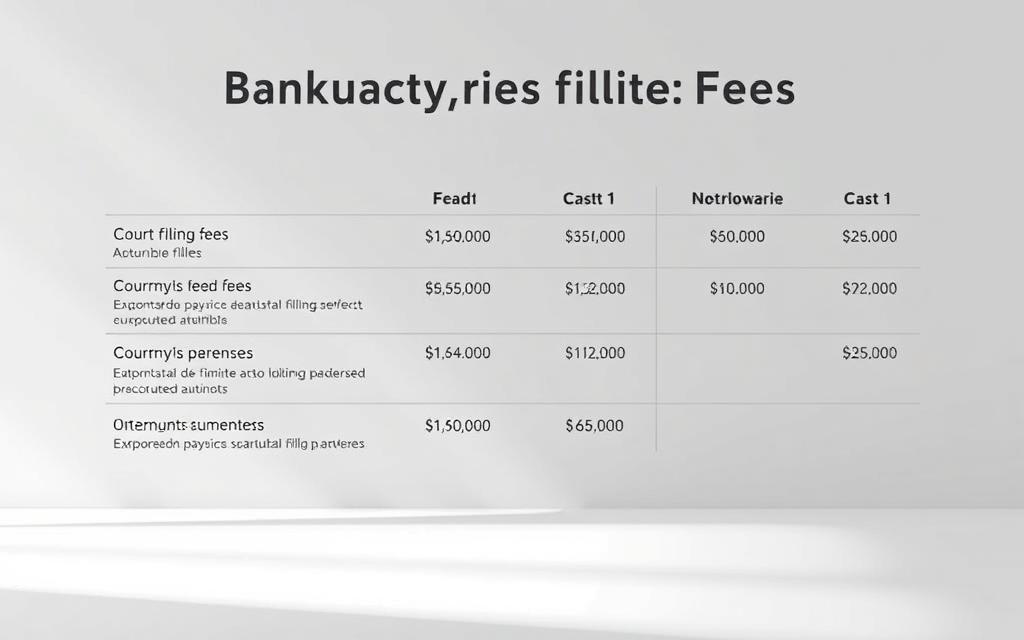
The fees for filing bankruptcy depend on the type. Chapter 7 costs $338, while Chapter 13 is $313. These fees are the same in most courts. But, some might get a fee waiver or pay in installments.
- Chapter 7 cost breakdown: $338 court filing fee
- Chapter 13 filing fee: $313 court filing fee
Credit Counseling and Debtor Education Requirements
Bankruptcy law requires two educational steps. You must take credit counseling and debtor education courses. These cost between $10 and $50 each. You need to finish the first course before filing and the second before getting debt relief.
| Bankruptcy Education Requirement | Estimated Cost |
|---|---|
| Pre-Filing Credit Counseling | $10 – $25 |
| Debtor Education Course | $25 – $50 |
These costs are just the start of the bankruptcy journey. While they might seem tough, they’re a big step towards financial recovery and debt relief.
Attorney Fees for Bankruptcy Cases
Going through bankruptcy means knowing the cost of lawyers. The price for legal help can change a lot. People thinking about bankruptcy need to think about the money they’ll spend on lawyers.
How much a lawyer costs depends on the type of bankruptcy and how hard the case is. Most people need a lawyer to help them through the complex bankruptcy process.
Average Legal Representation Costs
Here’s what you might pay for a lawyer:
- Chapter 7 Bankruptcy: Costs are usually $1,500 to $2,500
- Chapter 13 Bankruptcy: Prices are often $2,500 to $3,500
- Hard cases might cost more
Factors Influencing Attorney Fees
Several things can change how much a lawyer costs:
- How hard the case is
- Where you live
- The lawyer’s experience
- The type of bankruptcy
Filing Without an Attorney
Filing on your own might seem cheaper. But, it can lead to big mistakes. These mistakes might cost more than what you save. Lawyers help keep your stuff safe and deal with legal stuff.
Thinking about the costs and benefits is key. Getting a lawyer can save you money in the long run. They make the bankruptcy process smoother and more strategic.
Hidden Costs Associated With Bankruptcy
Bankruptcy is more than just the cost to file. Hidden fees can greatly affect your money in ways you might not expect. Knowing about these costs helps you make better choices about getting out of debt.
When you think about bankruptcy, remember it’s not just the filing fees. The costs can go way beyond that.
Potential Loss of Assets
Bankruptcy can mean losing a lot of things you own. Depending on the type of bankruptcy, you might have to give up:
- Luxury items
- More property
- Valuable collections
- Investments
Credit Score and Future Financial Challenges
Bankruptcy can really hurt your credit score. Filing costs explained often don’t talk about how long it can take to recover.
| Bankruptcy Type | Credit Report Duration | Estimated Credit Score Impact |
|---|---|---|
| Chapter 7 | 10 years | 100-240 point drop |
| Chapter 13 | 7 years | 70-190 point drop |
These credit problems can make it hard to get loans later. You might also pay more interest. Lenders see bankruptcy as a big risk, which can limit your money options for a long time after filing.
Bankruptcy Alternatives: What Are Your Options?
Dealing with money troubles can be tough. But, you don’t have to go bankrupt. Looking into other choices can save you money and keep your credit score up. Knowing your options is key to getting back on track financially.

There are many good ways to handle debt. These options can help you feel better without the big costs of bankruptcy.
Debt Consolidation: Streamlining Your Financial Obligations
Debt consolidation is a smart way to handle many debts at once. It combines them into one loan with a lower interest rate. This can save you a lot of money compared to filing for bankruptcy.
- Combines multiple debts into one payment
- Potentially reduces overall interest rates
- Simplifies monthly financial management
Credit Counseling Services: Professional Financial Guidance
Credit counseling gives you expert advice on managing debt. It’s cheaper than bankruptcy and can really help. It’s a good choice for many people.
| Service | Average Cost | Potential Benefits |
|---|---|---|
| Initial Consultation | $0 – $50 | Financial assessment |
| Debt Management Plan | $25 – $100/month | Negotiated payment terms |
| Comprehensive Counseling | $100 – $300 | Personalized financial strategy |
Looking into these alternatives can really help with money troubles. Each one has its own benefits. This lets you pick the best one for your situation.
Long-Term Financial Implications of Bankruptcy
Bankruptcy can change your money situation for a long time. When you file on a budget, knowing the long-term effects is key. It’s not just about getting out of debt right away. It changes your financial picture for years.
Credit reports show bankruptcy for a long time. Chapter 7 stays on for up to 10 years. Chapter 13 is on for about 7 years. This can really affect your future money chances.
Credit Report Dynamics
Understanding credit report effects is important for budget planning. Here are some things to think about:
- Your credit score drops a lot after filing
- It’s hard to get new credit lines
- You might pay more interest on loans
- It’s tough to get a job or a place to live
Rebuilding Credit Strategically
Getting back from bankruptcy takes time and smart money management. Even though emergency costs seem high, you can rebuild your credit. Here’s how:
- Get a secured credit card
- Pay on time every month
- Keep your credit use low
- Check your credit reports often
Working hard on your finances can help you get your credit back. Bankruptcy is tough, but with careful planning, you can recover and stay stable financially.
Preparing for Bankruptcy: Financial Considerations
Dealing with money troubles needs careful planning, like when thinking about bankruptcy. It’s important to find ways to file for low cost. The first step is to plan well and make a budget that works.
When getting ready for bankruptcy, making a detailed financial plan is key. You need to look at your money situation now and think about what you might spend in the future.
Creating a Bankruptcy Budget
Creating a good bankruptcy budget involves a few important steps:
- Figure out how much money you make each month
- Write down all your monthly costs
- Find out how much it costs to file for bankruptcy in your state
- Think about the costs of a payment plan for bankruptcy
Emergency Funds and Future Planning
Being financially strong means having money set aside for emergencies. This money is like a safety net for you.
| Financial Planning Step | Recommended Action |
|---|---|
| Emergency Fund Target | 3-6 months of living expenses |
| Monthly Savings Goal | 10-15% of net income |
| Debt Reduction Strategy | Prioritize high-interest debts |
Knowing the rules in your state and looking for financial help can lower the cost of bankruptcy. Talking to a financial advisor can help make a plan that fits your needs.
State-Specific Variations in Bankruptcy Costs
Bankruptcy costs change a lot from state to state. It’s very important to know the fees in each state. Federal fees are the same everywhere, but the total cost can differ a lot.
- Local attorney fee structures
- Cost of living in specific regions
- Complexity of state-specific bankruptcy laws
- Regional economic conditions
State Filing Fee Differences
The cost of bankruptcy lawyers can vary a lot. Places like California and New York have higher costs because of the cost of living. But, rural areas have lower costs because of lower living costs.
Local Legal Fee Insights
Big cities usually have higher legal fees. Lawyers in big cities might charge 20-30% more than those in small towns. It’s a good idea to look at local fees and compare lawyers to find the best deal.
Looking into bankruptcy costs in your state can help you plan better. It helps you make smart choices when money is tight.
Common Misconceptions About Bankruptcy Costs
Bankruptcy is a big financial choice with many wrong ideas. People often don’t know enough when they try to figure out costs on their own. This can lead to big mistakes that hurt their money future.
Going through bankruptcy needs careful thought. People often don’t see how hard it is to do it without a lawyer.
Myths vs. Reality in Bankruptcy Expenses
- DIY bankruptcy cost might seem lower initially
- Fee waiver bankruptcy options exist for qualifying individuals
- Filing without attorney can increase risk of case dismissal
Trying to do it yourself can be risky. Studies from federal courts show DIY cases get dismissed a lot more than those with lawyers.
| Filing Type | Case Dismissal Rate |
|---|---|
| Self-Represented (DIY) | 36.5% |
| Attorney-Represented | 2.2% |
Public Perception of Bankruptcy Fees
Many think bankruptcy is too pricey and out of reach. But, there are ways to get help with fees that make it more doable.
Knowing the real costs and benefits is key. Getting help from a pro can save money and avoid big mistakes later on.
Conclusion: Making Informed Bankruptcy Decisions
Going through bankruptcy is complex. You need to look at the total cost guide. It’s not just the filing fees. You must think about both the upfront costs and the long-term effects.
The fees for filing are just a small part of the cost. You should really look at your own financial situation. Think about the good and bad sides of bankruptcy. Getting advice from a lawyer can help a lot.
Comprehensive Financial Evaluation
Choosing bankruptcy needs careful thought. You should talk to a bankruptcy lawyer. They can explain how it might affect your credit and protect your assets.
Every case is different. You need advice that fits your situation. A lawyer can help you understand what to expect.
Strategic Decision-Making
Getting out of debt takes planning and smart choices. Look at all your options and understand your financial situation. This way, you can make choices that fit your future and needs.